![[personal profile]](https://www.dreamwidth.org/img/silk/identity/user.png) gravityeyelids
gravityeyelidsvia http://ift.tt/2ee0GxK:
why-animals-do-the-thing:
captdaveswhalewatchingsafari:
amnhnyc:
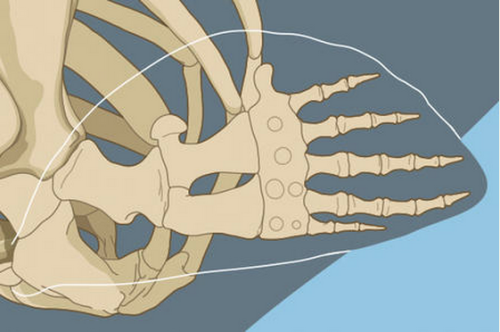
Did you know? Whales’ flippers, or pectoral fins, share bone structure with the human arm and hand. In fact, the bones of cetacean flippers are the same kinds of bones as in the human arm, with an upper arm bone, two forearm bones, and hand, wrist, and finger bones. In whales, fingers are elongated and may have additional bones.Read more on whales’ amazing adaptations here.
Awesome illustration! Many people don’t realize the bone structure of a flipper looks like this.
What a gorgeous illustration, seriously.
In case you aren’t aware, whales have these vestigial(ish, they’re still sorta useful) structures inside their flippers because their ancestors were terrestrial and returned to the sea. Some whales will even have vestigial bits of bone back by their pelvis indicative of having limbs there, once.
why-animals-do-the-thing:
captdaveswhalewatchingsafari:
amnhnyc:
Did you know? Whales’ flippers, or pectoral fins, share bone structure with the human arm and hand. In fact, the bones of cetacean flippers are the same kinds of bones as in the human arm, with an upper arm bone, two forearm bones, and hand, wrist, and finger bones. In whales, fingers are elongated and may have additional bones.Read more on whales’ amazing adaptations here.
Awesome illustration! Many people don’t realize the bone structure of a flipper looks like this.
What a gorgeous illustration, seriously.
In case you aren’t aware, whales have these vestigial(ish, they’re still sorta useful) structures inside their flippers because their ancestors were terrestrial and returned to the sea. Some whales will even have vestigial bits of bone back by their pelvis indicative of having limbs there, once.


